


For the past decade, the conversation around body shaping has been dominated by one idea: surgery.
Brazilian Butt Lifts. Breast implants. Fat transfers.
The promise is always the same — faster, bigger, more dramatic. And increasingly normalized. What was once considered extreme is now framed as routine. Clinics advertise curves the way beauty brands once advertised lipstick.
But beneath this normalization, another question is quietly resurfacing:
What if the body didn’t need to be cut, injected, or displaced to be reshaped?
What if the oldest methods — plants, nutrition, ritual — were not outdated, but overlooked?
Before Surgery, There Were Plants
Long before BBLs and implants entered the mainstream, curves were shaped differently. And in many parts of the world, they still are.
In Latin America, feminine curves were traditionally supported through food, fruits, and plant-based preparations meant to nourish volume rather than remove it. In the Amazon, fruits like aguaje were consumed as part of daily life, associated with fullness and pronounced hips. In the Andes, maca was valued not as a supplement, but as nourishment — strength and curves were never treated as opposites.
Across North Africa and the Middle East, plants such as fenugreek were deeply embedded in women’s routines, often linked to roundness and softness of form. In parts of Africa, external body care relied on ingredients like kigelia, used through massage rituals designed to enhance shape rather than correct it. In Asia, roots like dong quai were part of long-standing feminine traditions tied to balance and bodily expression.
These practices had one thing in common:
They worked with the body, not against it.
They were not about instant transformation. They were about guiding form, encouraging volume where desired, maintaining harmony elsewhere, and letting the body respond through consistency and care. No operating rooms. No anesthesia. No permanent decisions.
Why Modern Beauty Walked Away
Modern beauty largely abandoned this logic in favor of shortcuts. Surgery promised control. Pills promised speed. Plants were reduced to vague “natural ingredients” or dismissed as folklore.
Until recently.
CurvyLine® is part of a new generation of brands asking a disruptive question:
What if those traditional methods weren’t primitive — just unfinished?
Translating Ancestral Knowledge
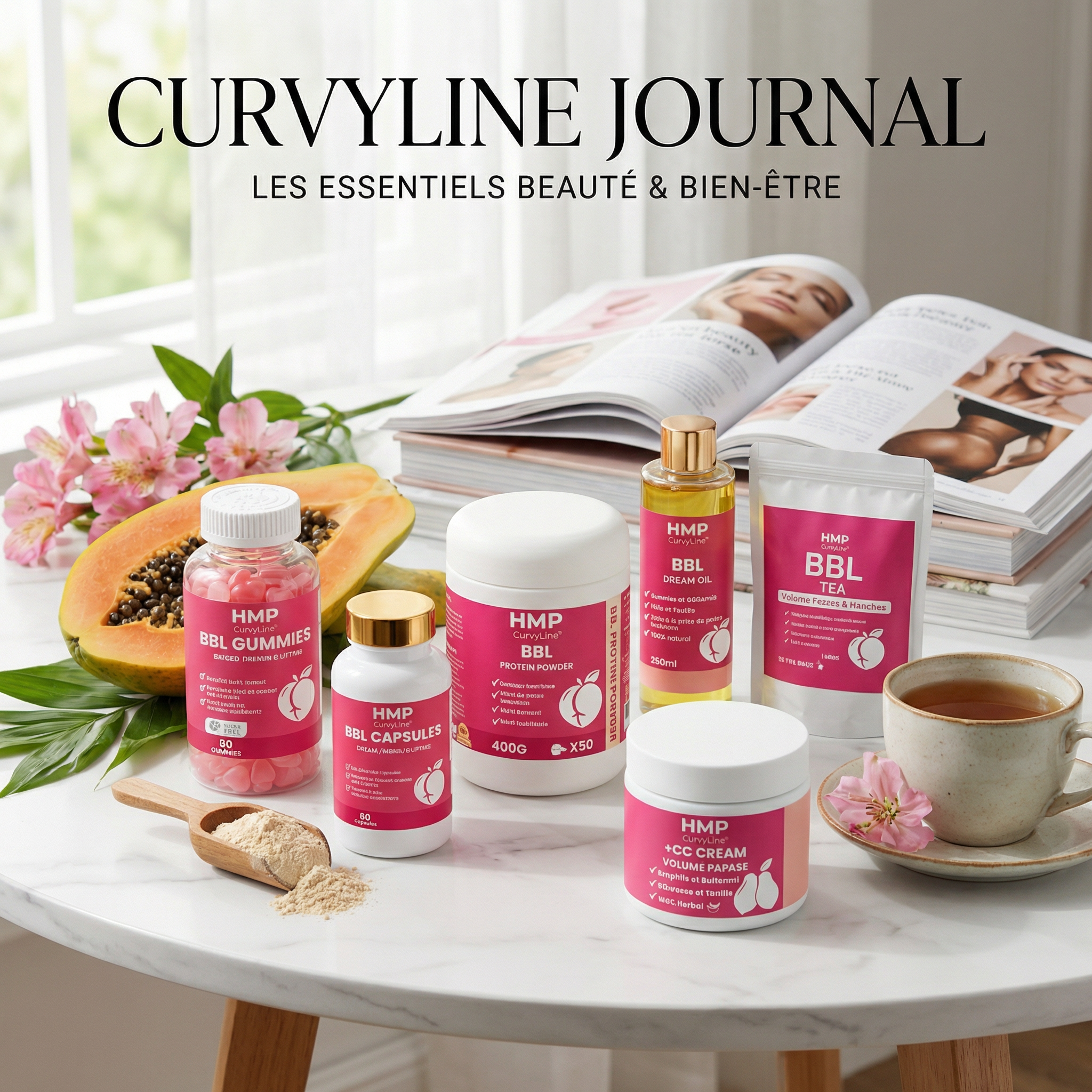
Instead of rejecting ancestral knowledge, CurvyLine has rebuilt it using modern formulation, precision, and delivery. The brand takes plants historically associated with feminine curves — fenugreek, maca, aguaje, saw palmetto, wild yam, blessed thistle, dong quai, kigelia, seaweed, tribulus — and integrates them into a structured, multi-angle system.
Internal activation comes through capsules or gummies designed to fit into daily routines. Nutritional formats like syrups and powders echo the food-based traditions that once supported volume and shape. Oils and creams bring back external rituals — massage, repetition, touch — but in forms adapted to modern life.
This is not nostalgia. It is translation.
What once required time, access, and informal knowledge is now concentrated into products that are easy to use, consistent, and designed for women who want curves without surgical escalation. No clinics. No implants. No BBL recovery rooms.
Agency Over Escalation
The appeal is obvious. Surgery offers speed, but at a cost — medical risk, permanence, and loss of control. Plant-based routines offer something different: agency. The ability to act on one’s body without turning it into a medical case.
CurvyLine does not position itself as anti-surgery. It exists beside it — as an alternative for women who want shape, volume, and definition without crossing that line.
A Pattern Repeating Across Industries
The bigger question is whether this approach could reshape the industry itself.
In food, we returned to fermentation.
In skincare, to oils and actives once considered old-fashioned.
In wellness, to breathwork and plant medicine.
Each time, the pattern is the same: modern systems rediscover that older methods, when refined and structured, can be both effective and safer.
Body care may be next.
If plants supported curves long before implants existed, and if modern formulation can amplify that knowledge without medical risk, then CurvyLine may represent more than a brand. It may signal a shift — away from extremes, toward methods that enhance rather than override the body.
The future of curves may not lie in operating rooms after all, but in the intelligent revival of what women have known — and used — for centuries.
CurvyLine®, as presented at curvy-line.com, is betting on exactly that.


